

How Should Buyers Evaluate a Vision Screener for a Children's Screening Program?
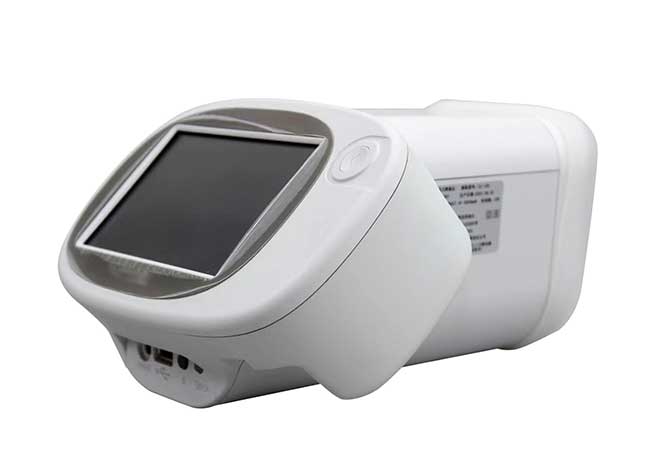
Evaluate a children’s vision screener as one part of a supervised program, from consent and preparation through recording, referral, and follow-up.
A screener supports identification for further evaluation; it is not a diagnosis, proof of eye health, or a final prescription.
Use the following procurement checks to test the complete workflow rather than the instrument in isolation.
What Is the Difference Between Vision Screening and a Comprehensive Eye Examination?
A screening program looks for children who may need further evaluation; a comprehensive eye examination is a different, more complete professional assessment.
A screening result is not a diagnosis, proof that no eye disease is present, or a final prescription. Procurement should preserve that boundary at every step.
Define the purpose before comparing devices
The purpose of screening is to identify children who may require further assessment. The National Center for Children’s Vision and Eye Health describes screening as a way to identify children needing evaluation by an eye-care professional in its 2015 recommended-practices framework. We use that historical framework to explain the screening-versus-examination distinction, not as a substitute for current local guidance. That distinction is central to purchasing: the device must support an appropriate referral pathway rather than be marketed internally as a substitute for examination.
A screener may collect or assist with information relevant to a program’s protocol, depending on its design and operating mode. It does not independently establish the full health of the eyes, explain every visual complaint, or determine a final prescription. A child can be difficult to screen, produce an incomplete result, or require professional evaluation even when a screening output appears reassuring. Conversely, a result that triggers referral should be handled according to the program’s clinical and administrative policy, not reinterpreted as a diagnosis by untrained staff.
The Hongdee Vision vision screener page can begin a model-specific product conversation. I would ask the supplier to describe intended use, operator steps, output language, data handling, and limitations in writing. The purchasing file should use “screen,” “refer,” and “further evaluation” consistently, avoiding claims about universal detection, treatment, or clinical performance.
| Program term | Procurement meaning | Do not infer |
|---|---|---|
| Screening | A structured identification step | A comprehensive examination |
| Refer | Directing a child for further evaluation | A confirmed condition |
| Pass or lower concern | A program output under defined conditions | Proof of normal eye health |
| Untestable | The planned process did not obtain a usable screen | No visual problem |
Write the boundary into communications
Consent materials, staff scripts, parent communications, and reports should state what the screening can and cannot show. The program should provide a clear route for questions and referrals. This is a governance requirement, not a product feature, and it should remain visible when the device is demonstrated to purchasing staff.
Which Age, Setting, and Operator Requirements Should the Device Meet?
Select a device for the children, locations, operators, and workflow in your actual program, without assuming that one age range, setting, or operating model fits every community.
Ask whether the instrument’s intended population, environment, operator training, and data workflow match your program; do not import universal age limits or performance claims.
Match the setting to the procedure
List where screening will occur: a clinic, school, community site, mobile service, or another approved setting. Each location may differ in lighting, noise, privacy, internet access, electrical supply, room size, waiting time, and staff availability. Observe how children enter, are prepared, positioned, screened, and moved to the next activity. A device that is easy to use in a quiet demonstration room may require a different plan in a busy school environment.
Population fit also needs careful wording. Use the program’s governing guidance and the supplier’s intended-use documentation to determine whether the device is appropriate for the children you plan to screen. Children with developmental, communication, behavioural, or visual needs may require adaptations or a separate professional pathway. Procurement should not create a blanket promise that every child can be screened successfully by the same method.
The operator is part of the system. Define who obtains consent, explains the process, positions the child, recognizes an incomplete attempt, records the result, communicates next steps, and escalates questions. Training requirements should be documented before purchase. The National Center’s recommendations include resources on screening personnel, untestable children, rescreening, and components of a screening system; use those materials as foundational context rather than as a universal current specification.
| Requirement | Questions for the buyer | Evidence to request |
|---|---|---|
| Population | Who is the model intended to screen? | Current intended-use statement |
| Setting | Can the workflow operate at each site? | Setup and environment guidance |
| Operator | What training and supervision are required? | Model-specific training plan |
| Data | How are results stored and protected? | Export, access, and downtime process |
Avoid one-number procurement
Do not select solely on a headline age, distance, speed, or accuracy statement. The relevant question is whether the full workflow can be implemented safely and consistently for the population and setting under your governance. Any threshold or interpretation rule must come from the responsible clinical program and applicable guidance, not from this purchasing article.
How Should a Pilot Evaluate Completed, Repeated, and Untestable Screens?
A pilot should measure workflow completion and recovery, including repeated attempts and untestable outcomes, rather than counting only apparently successful screens.
Record what happened at each step: completed, repeated, untestable, referred, and followed up—then use the pattern to improve the program without claiming clinical effectiveness.
Design a realistic pilot
Before testing, define the pilot question: Can trained operators follow the process? Can sites protect privacy? Are results recorded correctly? Can families understand next steps? Is the referral route usable? These are procurement and implementation questions. The pilot should not be presented as a clinical validation study unless an appropriately designed study and qualified oversight are in place.
Create a simple workflow record for every attempt. Note the site, operator, device identifier, consent status, child cooperation, mode used, whether a usable output was obtained, whether a repeat was attempted under the program’s procedure, and what action followed. Avoid collecting unnecessary personal information. The record should distinguish a completed screen from an attempt that produced no interpretable output. “Untestable” is an outcome requiring a defined next step, not a pass and not evidence that no concern exists.
The National Center’s published recommendations provide foundational discussion of instrument-based screening, untestable children and rescreening, and the components of a comprehensive system. Because that page identifies a specific historical recommendation framework, I would use it alongside current local clinical governance rather than claiming it establishes universal rules for every program or device.
| Pilot outcome | What to record | Program question |
|---|---|---|
| Completed screen | Mode, output, operator, record status | Was the workflow followed? |
| Repeat attempt | Reason and authorized next step | Is repeat guidance clear? |
| Untestable | Why no usable screen was obtained | Is recovery or referral defined? |
| Referral | Communication and destination | Can families complete the next step? |
Review patterns, not anecdotes
At the end of the pilot, review completion, repeat, and untestable patterns by site and operator without turning them into unsupported performance claims. Investigate whether differences arise from training, environment, instructions, population, device setup, or recordkeeping. Decide what must change before expansion, and preserve an escalation path for children who need professional assessment.
What Referral, Recordkeeping, and Training Plan Must Be in Place?
A device should not enter a children’s program until referral ownership, records, privacy, communication, training, supervision, and follow-up responsibilities are assigned.
The procurement plan is incomplete without a documented response to every screening outcome, including an untestable attempt and a family who cannot immediately complete referral.
Make the referral chain operational
Map the route from screening to the responsible eye-care professional or service. Identify who reviews the result, who contacts the parent or guardian, what information is provided, how urgency is handled under the program’s policy, and how completion is recorded. Do not write a generic instruction such as “refer as needed” without naming the owner and the next action. The appropriate clinical destination and timing depend on the child, local rules, and professional judgment.
Communication should explain that screening is not a diagnosis and that further evaluation determines what happens next. Families should receive accessible instructions, a contact route for questions, and information about what to do if they cannot attend the first referral option. Translation, disability access, and privacy considerations belong in the implementation plan. These are program responsibilities, not claims about the device.
Records should connect the child, date, site, operator, device or session identifier, outcome category, communication, referral, and follow-up status according to applicable privacy and retention rules. Limit access to authorized staff. If the device stores data locally or exports files, confirm how records are secured, corrected, backed up, and deleted. Build a downtime form for sessions when the instrument or network is unavailable.
Use Hongdee Vision’s contact page to request current support, training, and model documentation. Ask who provides training, what materials are supplied, how competency is documented, and how software or workflow changes are communicated. Do not assume that a product demonstration equals authorization to conduct a screening program.
| Plan element | Minimum decision | Responsible role |
|---|---|---|
| Interpretation | Who applies the approved program rules? | Clinical/program lead |
| Referral | Who contacts families and tracks next steps? | Referral coordinator |
| Records | What is recorded, protected, and retained? | Data/privacy lead |
| Training | Who trains, supervises, and refreshes staff? | Program manager |
Keep governance active
Set a review date for training, referral completion, untestable handling, data quality, equipment condition, and supplier support. If the program changes population, setting, device, or interpretation rules, reassess the workflow. A screener is one component in a broader system; responsible procurement keeps the clinical boundary, human oversight, and follow-up process visible.
Conclusion
Choose a children’s vision screener as part of a complete, supervised program. Confirm setting and operator fit, record every outcome, and preserve the essential boundary: screening is not diagnosis or a final prescription.