

Why Keep a Retinoscope in a Practice That Already Uses an Autorefractor?
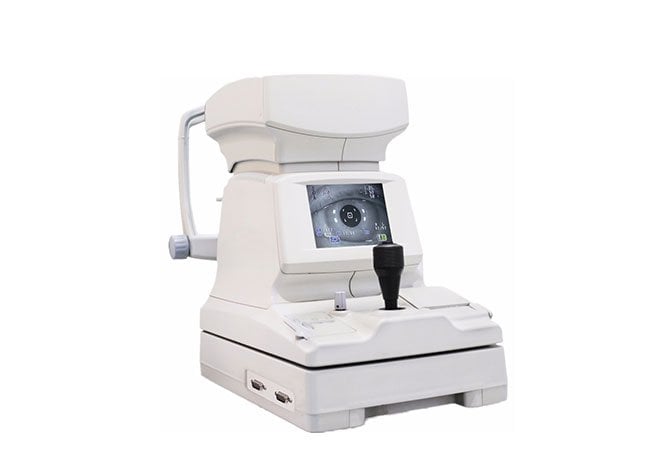
When an autorefractor is already in the room, what does a retinoscope add?
A retinoscope gives a trained professional an independent objective observation; an autorefractor provides a rapid instrument-generated estimate. They complement a full examination rather than supply an automatic prescription.
The practical choice starts with the tasks, users, and supporting equipment.
How Do Retinoscopy and Autorefraction Fit into a Professional Refraction Workflow?
The question is whether a retinoscope adds a useful professional observation beside an automated measurement—not whether it should replace a complete examination.
A retinoscope supports objective assessment by an appropriately trained professional, while an autorefractor offers a rapid instrument-generated estimate. Neither result should be treated as a finished prescription without the appropriate examination and clinical judgment.
Different inputs, different observations
Retinoscopy uses the examiner’s observation of the movement and characteristics of reflected light in the pupil. EyeWiki describes it as an objective assessment that does not rely on subjective patient responses and notes its usefulness when cooperation is difficult, including some examinations of infants, young children, or people with developmental delays. It can also contribute information about accommodative behaviour and media issues, but those possible uses do not turn a handheld instrument into a diagnostic conclusion on its own. Read the EyeWiki retinoscopy overview for the basic clinical context.
Autorefraction uses a computer-controlled instrument to estimate refractive error through its own measurement process. It is often efficient for a busy practice and can create a repeatable starting record. Yet alignment, fixation, ocular media, accommodation, tear-film conditions, and the instrument’s measurement method can affect the result. The printed or displayed value is therefore a starting point for a qualified examination, not a universal prescription.
Where the tools complement one another
A useful workflow may use the autorefractor to organise initial data and retinoscopy when the clinician needs an independent objective observation, when the automated result appears inconsistent with the presentation, or when patient feedback is not dependable. Subjective refinement and other examination steps still matter. The goal is not to make a retinoscope prove that an autorefractor is wrong; it is to give the professional another evidence stream.
| Workflow question | Autorefractor | Retinoscope |
|---|---|---|
| Main output | Instrument-generated estimate | Examiner-observed reflex assessment |
| Patient response required | Usually fixation and cooperation | Less dependent on verbal responses, but requires professional skill |
| Best buying lens | Speed, repeatability, records | Observation, control, balance and training |
| Final prescription | Not by itself | Not by itself |
Which Retinoscope Features Should Buyers Compare?
A buyer should compare the features that affect what a trained examiner can see and control, rather than assuming a longer specification list guarantees better clinical performance.
Compare illumination and viewing control, beam or streak usability, handle ergonomics, power options, durability, and documentation; then test those features with the people who will actually use the instrument.
Compare the optical task first
Ask whether the intended work calls for a streak retinoscope, a spot beam, or another configuration described in the supplier’s documentation. A streak design may be preferred for particular working methods, but the purchase decision should follow the practice’s training and examination protocol. Evaluate the ability to adjust the relevant illumination and viewing controls, the clarity of the reflex, the balance of the instrument in the hand, and how easily the examiner can maintain a consistent working position.
Treat catalogue labels such as “bright,” “professional,” or “high quality” as questions for a demonstration under controlled room lighting. Invite more than one intended user to handle the device and explain which control they are changing and why.
Include power and handling in the comparison
A handheld instrument is part of a kit. Battery type, charging or replacement arrangements, handle compatibility, lamp or LED documentation, and storage all affect availability. Confirm whether the quoted item is the head only, a head plus handle, or a complete set. Check whether the practice needs a spare handle, a charging base, protective case, or a compatible trial lens set.
The Hongdee Vision Ophthalmoscope and Retinoscope page is a sensible starting point for a product enquiry. Ask for the exact model list and written contents before approval.
Retinoscope and ophthalmoscope are not interchangeable
A retinoscope projects light to help a trained examiner assess the retinal reflex during objective refraction. An ophthalmoscope is designed to view ocular structures. They may appear together in a catalogue, but the clinical task, training, and supporting equipment differ, so specify which instrument the practice needs.
| Instrument | Primary task | Buyer check |
|---|---|---|
| Retinoscope | Objective refraction observation | Beam, controls, handle, training |
| Ophthalmoscope | Viewing ocular structures | Head, illumination, intended examination |
Use an evidence-led comparison sheet
Record what was demonstrated, who tested it, what remains unconfirmed, and which document supports each claim. For the specified model, compare usability and workflow fit; make accuracy comparisons only when a valid, model-specific test protocol and evidence are available.
During the demonstration, ask users to repeat the same control changes and handling sequence. Note whether the view remains usable for the intended room lighting and whether the instrument can be returned to its storage or charging position without confusion. These observations do not establish clinical accuracy, but they do expose training, availability, and workflow issues before the purchase is final.
What Training and Supporting Equipment Does Retinoscopy Require?
The purchase is incomplete if the practice receives a handheld device without a plan for professional training, supervision, supporting lenses, and result review.
Budget for trained users, supervised practice, a suitable lens or phoropter setup, and a review process; keep prescription decisions within qualified clinical training and examination.
Define the user and the protocol
Start with the professional role, scope of practice, and local requirements that apply to intended users. A supplier can explain instrument controls and care, while recognised education, supervised practice, and the practice’s examination protocol establish clinical competence. Keep prescription decisions within that professional process.
A purchasing brief can still ask useful questions: Who will perform the observation? What patient groups are in scope? How will the finding be recorded? When will the clinician repeat or escalate an unexpected result? What independent examination follows the objective estimate? These questions make the training requirement visible while keeping prescription decisions within professional review.
Plan the supporting set
Retinoscopy may need trial lenses or a phoropter for the professional’s established method. The Hongdee Vision Trial Lens Set page can help start a coordinated enquiry. Confirm lens range, frame or holder compatibility, markings, storage, and replacement policy separately. Check the specified set against the intended frame, room, and recordkeeping process before approving the complete kit.
We also ask the clinical lead to define how new users demonstrate competence before working without supervision. The equipment handover can cover controls and care, while the clinical team owns interpretation and patient assessment. Keeping those responsibilities separate helps a distributor quote relevant support without presenting a product demonstration as professional qualification.
Use this short training checklist:
| Item to confirm | Why it matters | Evidence to request |
|---|---|---|
| User role and training | Sets an appropriate scope | Training record or protocol |
| Supporting lenses | Makes the kit usable | Compatibility statement |
| Result record | Keeps findings traceable | Record template |
| Escalation route | Clarifies clinical review | Written workflow |
How Should Buyers Plan Batteries, Handles, and Replacement Components?
Reliability depends on knowing what is included, how consumables are sourced, and which parts are approved for the selected model.
Request a model-specific bill of materials, power plan, replacement route, and care instructions before purchase; keep a spare strategy proportional to service access and clinical dependence.
Build the component list before the quote
List the instrument head, handle, battery or power source, charger or charging stand, bulbs or light modules if applicable, case, and any mounting or storage accessory. Ask the supplier to identify included items versus optional items. Record model and revision details because an apparently similar handle or charger may not be interchangeable.
For a multi-room practice, decide whether each room needs a complete working set or whether a controlled shared kit is realistic. Consider charging locations, cleaning and storage responsibilities, and how the practice will identify a device awaiting service. A spare should solve a defined continuity risk, not simply increase inventory.
We label shared components clearly and assign responsibility for checking that a complete kit is available before the session. That is more useful than a spare whose compatibility nobody can confirm.
Confirm the service scope
Confirm recommended care, warranty scope, lead times, and service contact in writing for the specified model and market. If a component detail is not stated, mark it “to confirm” and request the applicable document rather than assuming a value.
Use the CTA on the product page or Hongdee Vision Contact Us to send the intended model, number of rooms, power environment, and supporting equipment. Keep the enquiry limited to equipment and workflow details, and ask for a configuration response that distinguishes confirmed facts from project-specific recommendations.
| Service item | Buyer question | Record |
|---|---|---|
| Care | Which routine applies to the specified model? | Care document |
| Parts | Which handle, battery, or charger is approved? | Parts list |
| Support | Who handles a fault in the target market? | Written contact route |
Conclusion
A retinoscope can add a trained professional’s objective observation beside an autorefractor. Buy the instrument, accessories, training, and service plan as one documented workflow—not as a promise of an automatic prescription.