

How Can Ophthalmic Equipment Distributors Plan Spare Parts Without Overstocking?
An empty shelf can delay a repair, but a full shelf can hide obsolete stock. We plan spares around service needs rather than catalogue breadth.
Ophthalmic equipment distributors can limit overstocking by linking each spare to the installed base, failure impact, confirmed compatibility, replenishment conditions, and an authorised repair process. We review the plan as equipment, service evidence, and supplier arrangements change.
The objective is not to own every possible component. It is to make a deliberate decision about which service interruptions local stock can actually resolve, and which require a different support arrangement.
Which Installed-Base and Service Records Should Guide Spare Parts Planning?
Sales totals do not show which equipment is still in use or which parts fit it. We begin with the active installed base.
We use exact models, revisions, locations, service responsibilities, and actual repair records to plan inventory. A product-family sales count is too broad when different versions use different parts or when the distributor is not authorised to perform a repair.
Connect the equipment list to service responsibility
We recommend keeping an equipment record for each supported site or account. It should identify the model, relevant revision or serial range, installation date where known, service scope, and contact responsible for reporting faults. The record should distinguish equipment still covered by the distributor from equipment transferred, retired, or supported under another arrangement.
A distributor may sell a broad ophthalmic product range without needing an equally broad stock of repair parts. The useful question is which installed units the business is expected to support, and what that support includes. Some tasks may involve user-replaceable items. Others may require a qualified technician, manufacturer assessment, or return to an authorised facility.
We also ask whether the distributor has the tools, instructions, and competence needed to use a stocked part. Inventory alone does not create repair capacity. A costly component on the shelf is not a continuity plan if nobody is authorised or equipped to install and check it.
Separate symptoms, confirmed failures, and purchases
Service records should distinguish the reported symptom, confirmed cause, part used, and repair outcome. Otherwise, repeated parts purchases can be mistaken for repeated component failures even when the original diagnosis was uncertain. Record unsuccessful substitutions as well as successful repairs so the next stock review has a meaningful history.
Our proposed planning sheet also notes when data is missing. A newly introduced model may have little local service history. In that case, begin with manufacturer guidance and an explicit review point rather than treating an unsupported assumption as a known failure rate. Update the plan when actual evidence becomes available.
| Record | Information to retain | Planning value |
|---|---|---|
| Installed equipment | Model and revision | Identifies compatible spares |
| Service scope | Who may perform which work | Prevents unusable inventory |
| Repair event | Symptom, cause, part, outcome | Improves demand evidence |
| Equipment status | Active, transferred, retired | Removes outdated assumptions |
How Can Distributors Separate Critical Spares from Low-Priority Stock?
A high unit price does not automatically make a part critical. We assess the service consequence and the practical alternatives before setting stock priorities.
We prioritise spares by interruption impact, access to alternatives, replenishment uncertainty, installed quantity, and the feasibility of local repair. We then consider cost, storage limits, and obsolescence rather than applying one stock percentage to every item.
Define what local stock would solve
For each candidate part, ask what happens if it is unavailable. Does the equipment become unusable, or can the clinic continue through an approved alternative? Is another suitable station available? Could an authorised loan unit solve the interruption more effectively than holding a rarely used component? The answers depend on the equipment and service agreement.
We recommend separating frequent consumable demand from repair demand. An item replaced through a planned operating process may need a different replenishment method from a component used only after diagnosis. Combining both in a single category can disguise why stock moves and make purchasing less predictable.
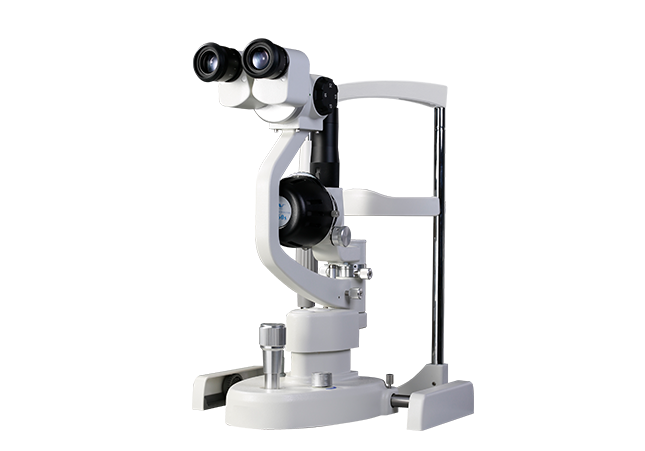
The historical slit lamp care guide published in 2010 includes spare parts among its maintenance topics. That is a useful reminder to consider continuity. Its device-era recommendations are not a universal stocking rule for today's different illumination systems, models, or repair arrangements.
Balance availability with inventory exposure
We assess purchase lead time, ordering restrictions, storage conditions, expiry where applicable, and the chance that a revision will make a part unsuitable. A low-cost item may still be poor stock if it cannot be identified correctly. An expensive item may be justified if it covers a clearly defined service risk and can be installed safely when needed.
The result should be a reasoned category, not a ranking based only on intuition. Some items belong in local stock. Others may be better covered by a confirmed supplier arrangement, a shared regional pool, or an approved replacement-unit process. We ask the team to document the reason for each choice and the information that could change it.
| Planning factor | Question | Effect on the decision |
|---|---|---|
| Interruption | What work stops without the part? | Defines service importance |
| Alternative | Is an approved substitute workflow available? | Tests the need for local stock |
| Replenishment | What lead time is confirmed? | Identifies supply exposure |
| Shelf risk | Can it expire or become obsolete? | Limits excess purchasing |
What Compatibility and Ordering Information Should the Manufacturer Provide?
Two components can look identical and still belong to different configurations. We ask for ordering information precise enough to prevent an incorrect substitution.
We request part numbers, compatible models and revisions, kit contents, installation authority, required checks, and ordering conditions. Photographs and catalogue names can assist identification, but written compatibility confirmation should govern the actual order.
Build a usable parts catalogue
Our preferred record links the part number to its description, relevant device versions, and any superseded number. It should explain whether the item is supplied alone or as part of a kit. Small included items can matter: a replacement assembly may require specific fittings, labels, or associated components identified by the manufacturer.
The supplier should clarify what information is needed before approving an order. That might include equipment identification, photographs of the component, fault details, or a technician's diagnosis. We recommend defining this process in advance so a service coordinator does not have to discover the requirements during an urgent case.
We also separate the ordering decision from installation permission. A distributor's ability to buy a part does not establish that its staff may perform the work. Ask which instructions, tools, training, inspections, or approvals apply. If the work must be carried out by an authorised service provider, include that route in the customer's support plan.
Confirm the commercial details separately
Lead times, minimum quantities, packaging units, return conditions, and warranty treatment should be confirmed for the specific order or agreement. We avoid treating a general equipment delivery statement as a promise about every spare. The commercial team should also understand how unused, incorrectly ordered, or superseded items will be handled.
For a useful Hongdee Vision service enquiry, provide the supported models, relevant revisions, service responsibilities, and the proposed list of parts. Request a response that separates confirmed compatibility from items requiring more information. Patient records are not needed for an inventory-planning request; equipment identification and a clear service description are the relevant inputs.
| Ordering field | Confirmation required |
|---|---|
| Identity | Exact part number and description |
| Compatibility | Supported model and revision range |
| Contents | Individual component or complete kit |
| Installation | Authorised role and required checks |
| Supply terms | Quantity, lead time, returns, and scope |
How Should Distributors Review Stock, Repairs, and End-of-Life Changes?
A stock plan can become outdated even when the shelf count is accurate. We review the assumptions behind the inventory, not just the quantities.
We compare stock movements with confirmed repairs, installed-base changes, supply updates, and product revisions. The review should identify shortages, unused items, incorrect orders, and end-of-life risks, then assign specific purchasing or service actions.
Review demand with its context
We recommend reconciling parts issued with the corresponding service jobs. A part removed from stock but later returned should not remain recorded as a confirmed failure. Separate unused returns, warranty replacements, damaged stock, and diagnostic substitutions so the purchasing team can see what genuinely drove demand.
The review should also check equipment leaving or entering the supported base. A growing installed population may justify a change, but only if the relevant parts and responsibilities are the same. Retired equipment, a new product revision, or a changed service contract can reduce demand even when historical sales remain high.
For each important item, record the current supply assumption and the date it was confirmed. When a quoted replenishment time changes, decide whether the right response is a stock adjustment, a different supplier arrangement, or a revised continuity plan. We prefer a documented decision to an automatic increase across the whole catalogue.
Handle product changes deliberately
A discontinuation notice should trigger a review of the supported equipment, remaining parts, approved alternatives, and customer commitments. A final purchase may be appropriate, but it also exposes the business to uncertain future demand and storage risk. We ask the team to document its assumptions before committing to a large order.
Stock that is obsolete, damaged, or awaiting compatibility confirmation should be clearly separated from available service inventory. The review should name an owner for its disposition and prevent it from being issued by mistake. Good spare parts planning therefore connects purchasing, technical service, and account management. Each team contributes a different part of the evidence needed to keep the plan useful.
| Review finding | Follow-up action | Responsible function |
|---|---|---|
| Repeated service shortage | Check demand and replenishment assumptions | Service and purchasing |
| Unused or returned parts | Reconcile with repair outcomes | Inventory and service |
| New revision | Confirm interchangeability | Technical support |
| Discontinued component | Review support and final-buy options | Management and supplier |
Conclusion
We plan spares around supported equipment and real service decisions. Accurate identification, confirmed repair capability, clear supply terms, and regular reviews help protect availability without filling shelves with parts the business cannot use.